proprioceptive activities pdf
Proprioceptive Activities: A Comprehensive Guide
Discover valuable PDF resources from NHS Borders, Ealing Paediatric OT, and Sensory Savvy Classroom, offering diverse proprioceptive activity guides for children’s development.
What is Proprioception?
Proprioception is a crucial sense, often overlooked, that informs us about our body’s position in space. It relies on information received from muscles and joints, allowing us to understand where our body parts are without needing to look. A simple test, like touching your nose with eyes closed, demonstrates this ability.
This internal awareness extends to gauging the force we use during activities – preventing us from writing too hard and breaking a pencil tip, for example. Understanding proprioception is key when exploring activities, as highlighted in resources like those from NHS Borders Occupational Therapy. These resources emphasize its role in everyday movements and coordination, forming the foundation for targeted interventions detailed in available PDF guides.
The Role of Proprioception in Daily Life
Proprioception underpins countless daily actions, from maintaining posture and balance to coordinating complex movements like walking and writing. It’s essential for navigating our environment safely and efficiently. Resources, such as those offered in PDF format by Ealing Paediatric Occupational Therapy, demonstrate how a well-functioning proprioceptive system supports participation in everyday routines.
Specifically, “heavy work” activities – carrying groceries or using resistance bands – leverage proprioceptive input to regulate arousal levels. These activities can calm an overactive child or conversely, “wake up” the body in the morning, preparing it for the day. Understanding this role, detailed in guides from Sensory Savvy Classroom, is vital for implementing effective proprioceptive strategies.
Proprioception and Sensory Processing
Proprioception isn’t isolated; it’s deeply intertwined with other sensory systems, particularly vestibular processing. Many activities, as highlighted in PDF guides from resources like Sensory Savvy Classroom, provide both proprioceptive and vestibular input, enhancing their effectiveness. NHS Borders Occupational Therapy resources explain proprioception as a crucial sense, informing the brain about body position.
Difficulties with proprioception often manifest as clumsiness, poor posture, or difficulty with fine motor skills. Addressing these challenges through targeted activities – detailed in downloadable guides – can improve sensory integration. “Heavy work” activities, frequently recommended in these PDFs, provide strong sensory feedback, aiding in self-regulation and improved body awareness.

Benefits of Proprioceptive Activities
PDF guides reveal these activities promote calming, improve body awareness, and enhance motor skills, aiding emotional regulation and preparing children for daily routines.
Calming and Regulation
Proprioceptive activities, detailed in PDF resources from sources like Ealing Paediatric Occupational Therapy, are powerfully effective for calming an overactive child. These “heavy work” activities utilize muscle effort – carrying, pushing, or pulling – to provide deep pressure input to the nervous system.
This input has a regulating effect, helping to decrease arousal levels and reduce behaviors like running in circles. The PDF guides emphasize that these aren’t just for calming; they can also “wake-up” the body, preparing a child to engage in their daily routine. Essentially, proprioceptive input helps the body understand its position in space, fostering a sense of control and reducing anxiety, as outlined in available resources.
Improving Body Awareness
PDF guides from NHS Borders Occupational Therapy highlight that proprioception is a crucial sense, informing us about our body’s position within its environment. This awareness is fundamental for coordinated movement and skillful execution of tasks. A simple test, like touching your nose with eyes closed, demonstrates proprioceptive function.
Activities detailed in these resources – like animal walks and carrying weighted items – enhance this internal sense. By engaging muscles and joints, children develop a clearer understanding of where their body parts are in space. This improved body awareness, as explained in the PDFs, translates to better motor planning, reduced clumsiness, and increased confidence in physical abilities.
Enhancing Motor Skills
PDF resources, such as those from Ealing Paediatric Occupational Therapy, emphasize how proprioceptive activities directly contribute to improved motor skills. Heavy work activities – pushing, pulling, carrying – build strength and coordination, foundational elements for refined motor control. These activities, detailed in downloadable guides, help children learn to modulate force, crucial for tasks like writing without breaking pencil leads.
The Sensory Savvy Classroom PDFs suggest incorporating bear hugs and resistance exercises. By strengthening the connection between muscles and the brain, these exercises refine motor planning and execution. Ultimately, enhanced proprioception, as outlined in these resources, leads to greater precision, efficiency, and fluidity in all movements.
Types of Proprioceptive Activities
PDF guides categorize activities into ‘heavy work’ – carrying, lifting – and resistance exercises, utilizing bands or weight-bearing for optimal sensory input.
Heavy Work Activities
Heavy work activities, detailed in various PDF guides from sources like NHS Borders and Ealing Paediatric Occupational Therapy, are foundational for proprioceptive input. These exercises involve strong muscle contractions, effectively calming an overactive child or awakening a sluggish one.
PDF resources highlight carrying heavy items – groceries, backpacks, or medicine balls – as prime examples. Similarly, pushing or pulling substantial weight provides significant proprioceptive feedback. These activities aren’t just about physical exertion; they’re about providing the body with crucial information about its position and force application.
The Ealing PDF specifically notes using heavy muscle work to regulate emotional states, offering a practical approach to managing hyperactivity. These readily accessible guides offer detailed instructions and adaptations for diverse needs.
Carrying and Lifting
PDF guides from NHS Borders and Ealing Paediatric Occupational Therapy emphasize carrying and lifting as core “heavy work” proprioceptive activities. These tasks provide substantial input to muscles and joints, enhancing body awareness. Simple actions like bringing in groceries, a frequently cited example in available PDFs, offer significant benefits.
Furthermore, utilizing a fully-packed backpack, or even incorporating weighted items like medicine balls (detailed in occupational therapy resources), provides controlled resistance. These activities aren’t merely about strength; they’re about the sensory feedback generated during the effort.
PDF resources suggest adapting the weight to the child’s ability, ensuring safety and maximizing proprioceptive impact. Consistent implementation, as outlined in these guides, supports regulation and improved motor skills.
Pushing and Pulling
PDF resources, particularly those from My little guide to PROPRIOCEPTION, highlight pushing and pulling as vital resistance-based proprioceptive activities. These actions engage large muscle groups, delivering strong sensory feedback crucial for body awareness and regulation; Utilizing resistance exercise bands is frequently recommended in these downloadable guides.
The guides emphasize that the force applied during pushing or pulling should be appropriately challenging, but safe for the individual. Activities like pushing a weighted cart or pulling a toy wagon are practical examples detailed in occupational therapy PDFs.
Consistent engagement in these tasks, as outlined in the resources, can aid in calming overactive individuals and preparing others for focused activity, promoting a regulated state.
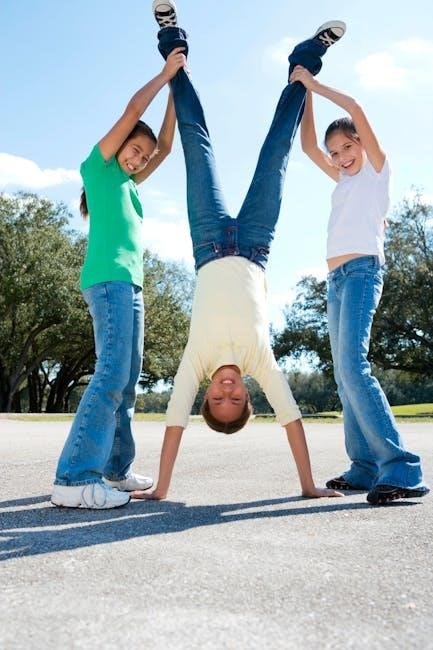
Resistance Activities
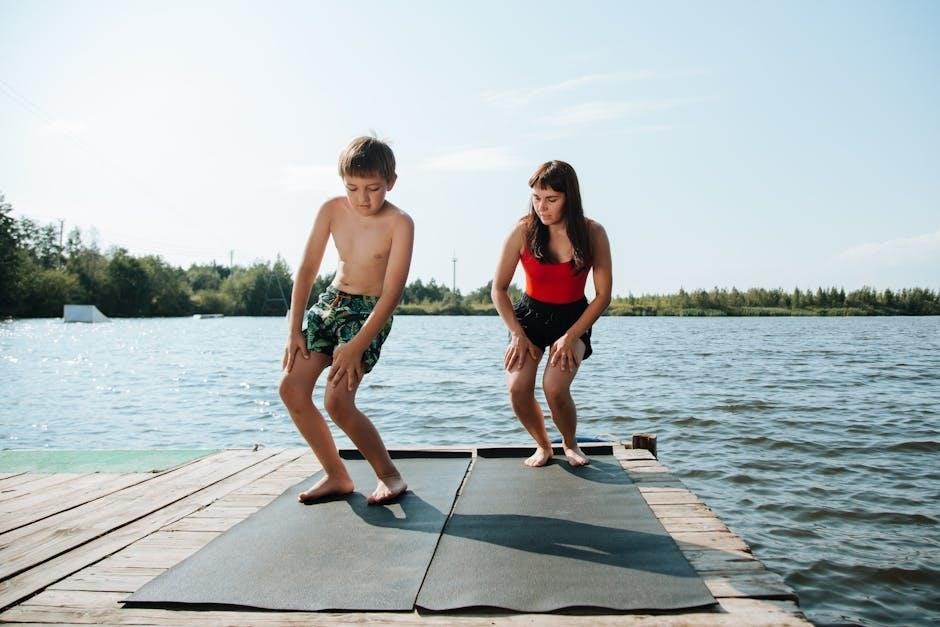
PDF guides from occupational therapy services, like those offered by NHS Borders and Ealing Paediatric OT, consistently emphasize resistance activities as powerful proprioceptive tools. These exercises involve working against a force, providing significant input to muscles and joints, enhancing body awareness.
Resources detail two primary types: utilizing resistance bands and engaging in weight-bearing exercises. My little guide to PROPRIOCEPTION specifically mentions resistance bands as a key component. These PDFs suggest adapting the resistance level to suit individual needs and abilities.
The benefits, as highlighted in these downloadable resources, include improved motor skills, calming effects, and enhanced regulation, making resistance activities a cornerstone of proprioceptive intervention.
Using Resistance Bands
PDF resources from occupational therapy services, such as those available from NHS Borders and Ealing Paediatric OT, frequently showcase resistance bands as accessible tools for proprioceptive input. These guides detail how bands provide a controlled resistance, stimulating muscles and joints to enhance body awareness.
My little guide to PROPRIOCEPTION explicitly lists using resistance exercise bands as a valuable activity. PDFs suggest various exercises – pulling, pushing, and stretching – adapting band tension to match the child’s strength and ability.
These downloadable resources emphasize that resistance band activities are beneficial for improving motor skills and promoting calming regulation, offering a versatile and effective proprioceptive intervention.
Weight-Bearing Exercises

PDF guides from occupational therapy sources, including NHS Borders and Ealing Paediatric OT, highlight weight-bearing exercises as crucial for developing proprioception. These resources detail activities like wall pushes and animal walks (bear crawls, crab walks) which provide significant joint compression and muscle activation.
The “Sensory Savvy Classroom” PDF emphasizes the importance of heavy work, which inherently involves weight-bearing. These downloadable materials explain how these exercises help children understand their body position and force application.
Guides suggest adapting exercises to different abilities, ensuring safe and effective proprioceptive input. Weight-bearing activities are presented as tools for both calming and alerting, offering versatile therapeutic benefits.
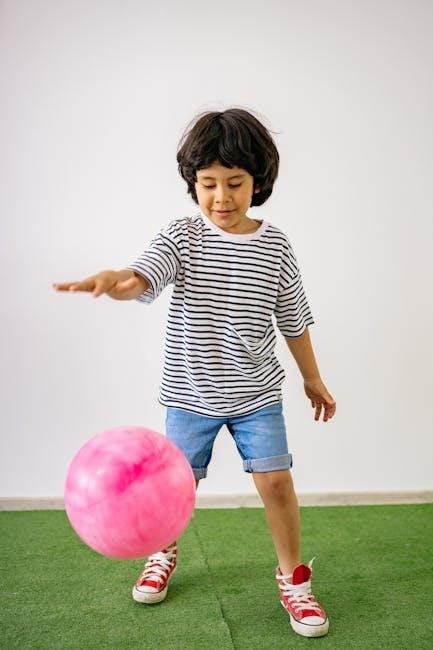
Specific Proprioceptive Activities
PDF resources detail bear hugs, wall pushes, animal walks, and carrying weighted items – all effective exercises for enhancing body awareness and regulation.
Bear Hugs
Bear hugs are a readily accessible proprioceptive activity, requiring no equipment, as highlighted in resources like those from Sensory Savvy Classroom. This simple action provides deep pressure stimulation, effectively calming the nervous system and promoting a sense of security.
PDF guides suggest offering a bear hug or demonstrating self-hugs. The act of compressing the body provides valuable input to muscles and joints, enhancing body awareness. This is particularly useful for children who are overstimulated or seeking sensory input.
Occupational Therapy services, such as NHS Borders, emphasize the importance of proprioception for understanding body position. Bear hugs contribute to this understanding, offering a grounding and regulating experience. They are easily adaptable for various ages and abilities, making them a versatile tool.
Wall Pushes
Wall pushes represent a fantastic, easily implemented proprioceptive activity, often detailed within occupational therapy PDF guides. This exercise involves the child placing their hands against a wall and pushing firmly, engaging multiple muscle groups simultaneously. The sustained muscular effort delivers significant proprioceptive input.
Resources from services like NHS Borders highlight the system’s role in force regulation; wall pushes directly address this. The activity enhances body awareness by providing feedback from the muscles and joints during exertion. It’s a ‘heavy work’ activity, beneficial for both calming and alerting, as noted by Ealing Paediatric OT.
Adaptations can include varying push duration or adding resistance, catering to different needs. This simple exercise is a powerful tool for sensory regulation and improving motor planning skills.
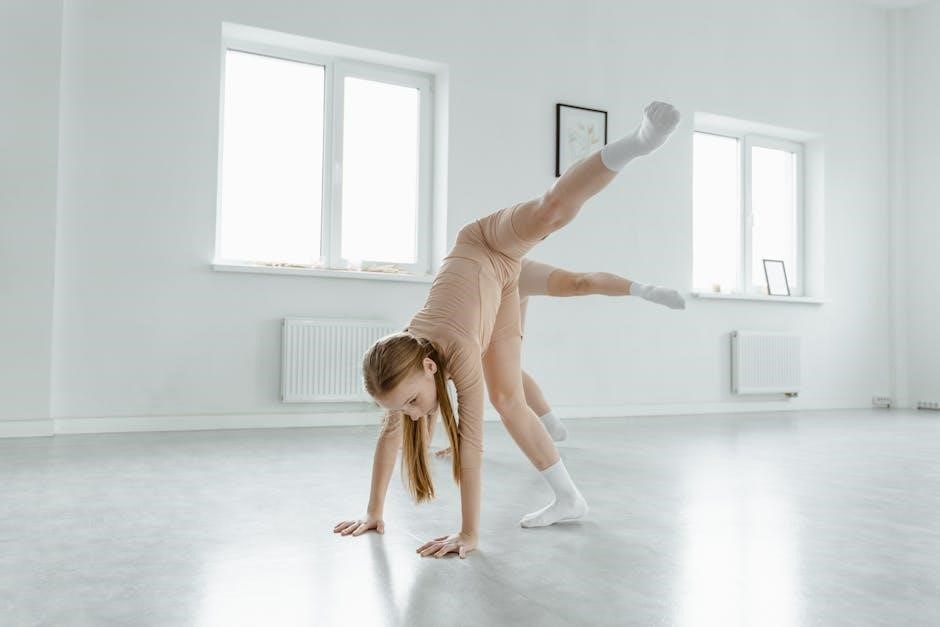
Animal Walks (Bear Crawls, Crab Walks)
Animal walks – including bear crawls and crab walks – are dynamic proprioceptive activities frequently featured in occupational therapy resources like those from Sensory Savvy Classroom. These movements require coordinated effort from numerous muscle groups, providing substantial proprioceptive input to the joints and muscles.
PDF guides emphasize ‘heavy work’ as a calming strategy; animal walks perfectly fit this description. Bear crawls, for instance, engage core, arms, and legs, enhancing body awareness and spatial orientation. Crab walks similarly challenge coordination and strength.
NHS Borders resources highlight the system’s role in understanding body position; these activities directly address this skill. Adaptations can modify distance or surface, tailoring the challenge. They’re excellent for motor planning and regulation.
Carrying Weighted Items
Carrying weighted items is a cornerstone of proprioceptive activities, consistently recommended in PDF guides from sources like Ealing Paediatric Occupational Therapy and occupational therapist resources. This “heavy work” provides deep pressure to muscles and joints, enhancing body awareness and promoting a calming effect, particularly for children needing regulation.
Examples include bringing in groceries, using a weighted backpack, or utilizing medicine balls – all detailed in various online resources. The NHS Borders Occupational Therapy service emphasizes the system’s role in force perception; carrying weight directly addresses this.
Adjusting the weight is crucial; guides suggest starting light and gradually increasing. This activity improves strength, coordination, and postural control, offering versatile benefits.
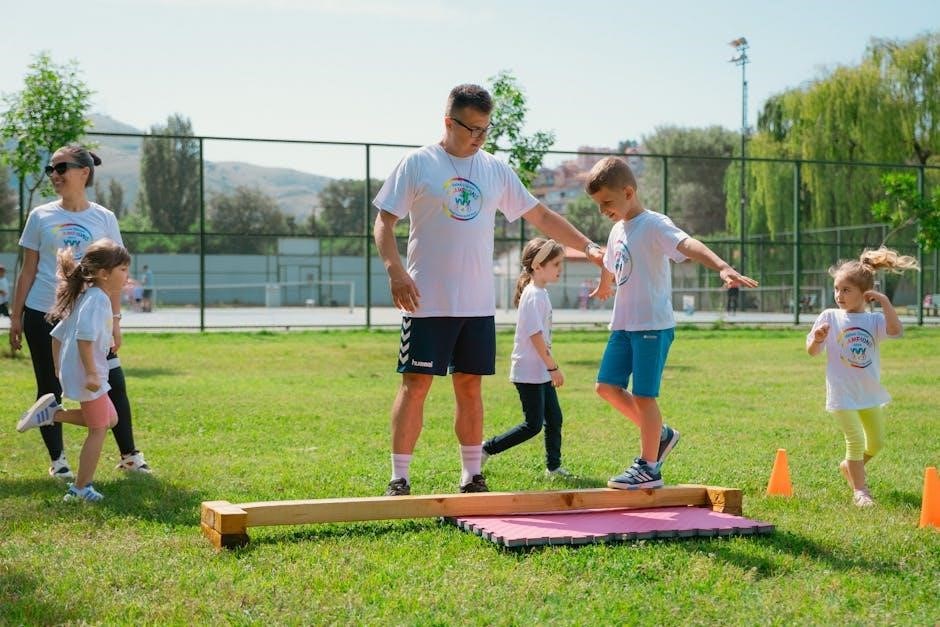
Implementing Proprioceptive Activities
PDF guides from NHS Borders and Ealing OT highlight adapting activities for age/ability, creating rich environments, and prioritizing safety during implementation for optimal results.
Adapting Activities for Different Ages and Abilities
PDF resources emphasize tailoring proprioceptive activities to individual needs. For younger children, simple bear hugs and gentle wall pushes are ideal starting points, fostering body awareness. As children grow, introduce carrying weighted items or using resistance bands, gradually increasing the challenge.
Guides from NHS Borders and Ealing Paediatric Occupational Therapy highlight offering three versions of exercises, allowing therapists and caregivers to select the most appropriate level. Consider a child’s strength, coordination, and sensory sensitivities when choosing activities. Modifications might involve reducing weight, shortening durations, or providing assistance.
Remember, the goal is to provide just enough challenge to stimulate the proprioceptive system without causing frustration or discomfort. Regularly assess the child’s response and adjust activities accordingly, ensuring a positive and beneficial experience.
Creating a Proprioceptive-Rich Environment
PDF guides suggest integrating “heavy work” into daily routines to create a consistently proprioceptive-rich environment. This involves incorporating activities like carrying groceries, helping with household chores, or using weighted backpacks. The Ealing Paediatric OT resource specifically notes this can help “wake-up the body” in the morning.
Designate specific areas for proprioceptive input, such as a corner with resistance bands or a space for animal walks. Encourage frequent movement breaks throughout the day, incorporating pushing, pulling, and lifting activities.
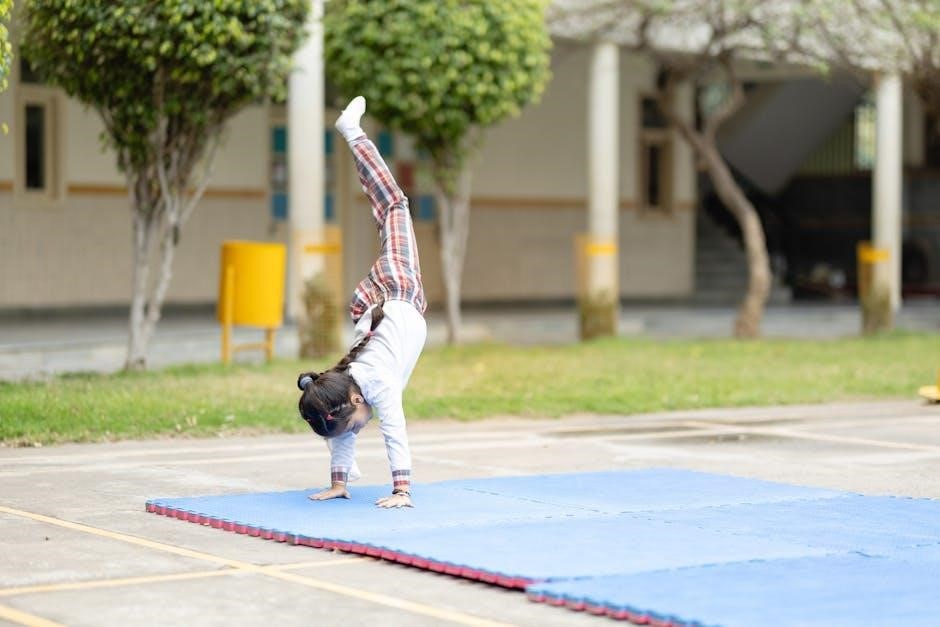
Consider adding weighted blankets or vests to provide calming, consistent input. Regularly review resources like those from Sensory Savvy Classroom for activity ideas to maintain engagement and variety, fostering a supportive and stimulating sensory experience.
Safety Considerations
PDF resources emphasize adapting activities to individual abilities; always supervise children, especially during heavy work or resistance exercises. Ensure adequate space is available to prevent collisions during animal walks or carrying weighted items.
Start with lighter weights and gradually increase resistance as strength improves. Be mindful of any pre-existing medical conditions or physical limitations. The NHS Borders guide highlights the importance of understanding a child’s force application during tasks like writing.
Monitor for signs of fatigue or discomfort and adjust the activity accordingly. Prioritize proper form over the amount of weight lifted or resistance used. Regularly consult with an occupational therapist for personalized guidance and safety recommendations.
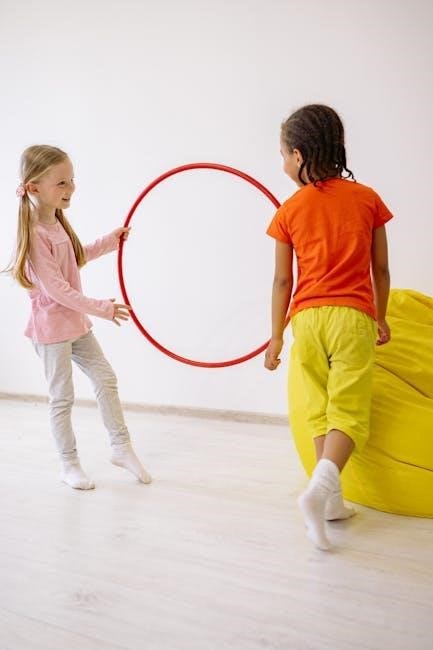
Resources for Proprioceptive Activities (PDFs & Guides)
Explore helpful PDF guides from NHS Borders, Ealing Paediatric OT, and Sensory Savvy Classroom, providing detailed proprioceptive activity ideas and implementation strategies.
NHS Borders Occupational Therapy Resources
NHS Borders Children and Young Peoples Occupational Therapy Service offers valuable insights into the proprioceptive system, explaining its role in body awareness and movement coordination. Their resources highlight how this sense utilizes information from muscles and joints, enabling actions like touching your nose with eyes closed.
They emphasize that proprioception helps regulate force during activities – crucial for tasks like writing without breaking the pencil lead. The service recognizes “heavy work activities” as beneficial, particularly for calming overactive children or preparing them for daily routines. These resources provide a foundational understanding of proprioception and practical strategies for incorporating it into a child’s day, supporting sensory integration and overall development.
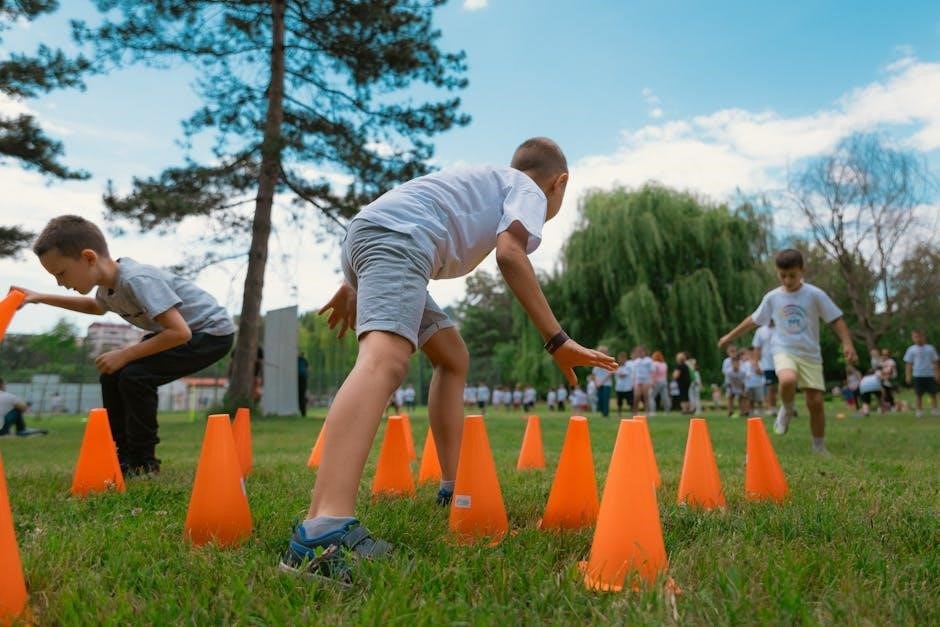
Ealing Paediatric Occupational Therapy Service Information
Ealing Paediatric Occupational Therapy Service emphasizes the power of “heavy work activities” to positively impact a child’s state of arousal. They explain how engaging in activities requiring significant muscle effort can effectively calm a child who is overly active, such as running in circles. Conversely, these activities can also be utilized to “wake up” the body, preparing a child to engage more fully in their daily routine.
This service recognizes the importance of proprioceptive input for self-regulation and focuses on practical applications. Their resources likely detail specific exercises and strategies to implement these heavy work activities, supporting children’s ability to manage their energy levels and participate more effectively in various settings.
Sensory Savvy Classroom Activities
Sensory Savvy Classroom provides accessible activities centered around proprioceptive input, specifically highlighting “Bear Hugs” as a readily available tool for emotional regulation and calming nerves. Their resources emphasize activities that can be implemented with little to no equipment, making them easily integrated into classroom or home environments.
The guide categorizes activities, noting which also provide vestibular input, offering a comprehensive approach to sensory integration. This resource likely details how to guide children through self-hugs or offer supportive bear hugs, fostering a sense of security and promoting self-regulation through focused proprioceptive experiences. It’s a practical guide for educators and parents.